
One bracelet. No charging. Quiet reassurance for the whole family.
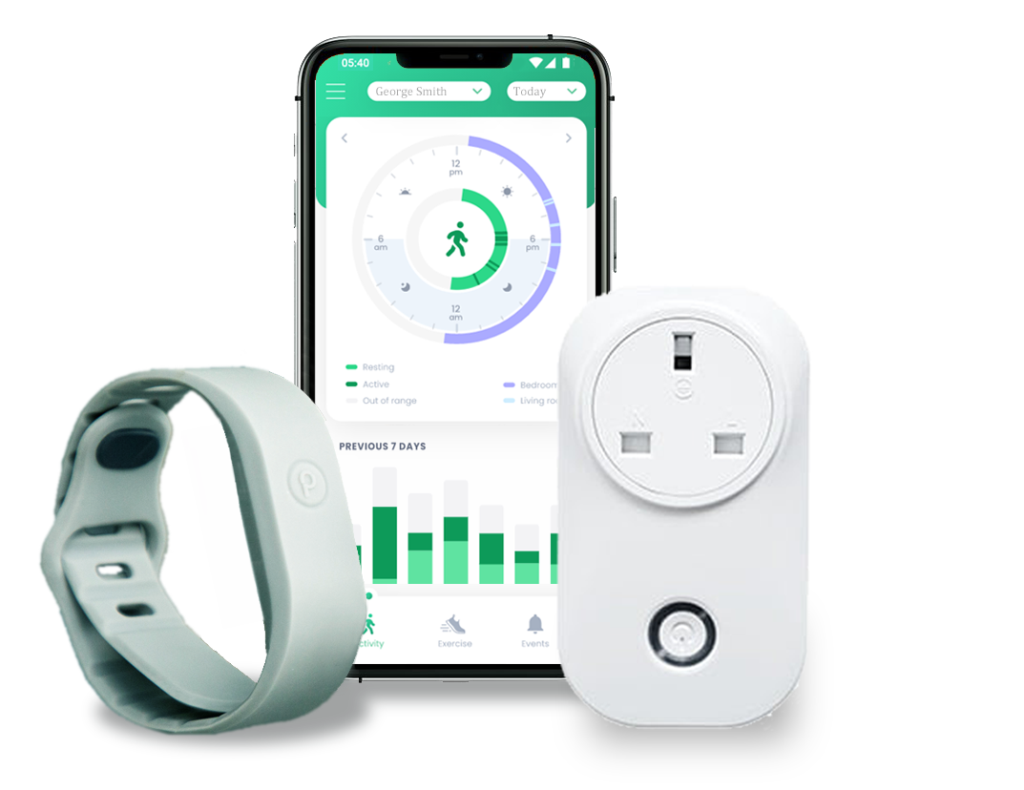
Most families arranging care are trying to solve one problem: not knowing. Did she get up this morning? Has she had a fall? The bracelet answers that. It’s a soft silicone band designed for older adults — waterproof, worn in the shower, and running for a whole year without charging. Nothing to switch on or plug in. You see the day on your phone, and hear straight away if something’s wrong.
How it helps your family
1. You find out about a fall in minutes, not hours
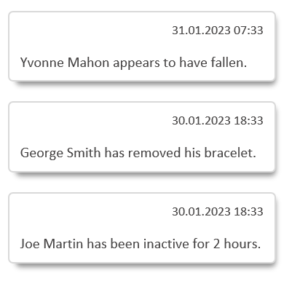
If your father falls, the bracelet detects it and watches for movement. If he doesn’t get up, an alert goes to everyone in the care circle. There’s also a button on the band he can press himself if he needs someone.
This is the difference between a fall discovered in ten minutes and a fall discovered the next morning.
2. You can see they’re okay without phoning to check
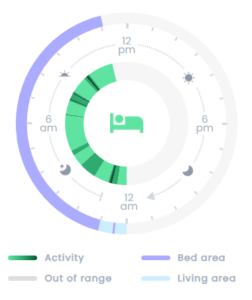
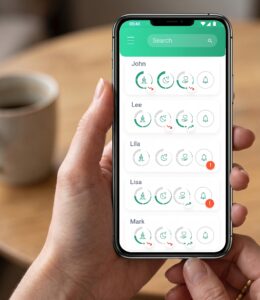
Open the app and you can see whether she’s up and about, how active she’s been, and whether she’s asleep right now — useful if she’s not answering calls.
It replaces the daily call that both of you know is really a check-in, while respecting her privacy.
3. You spot the slow changes before they become a crisis
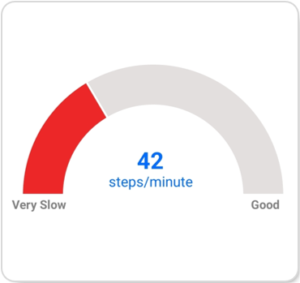
Falls are the emergency; decline is the real story. The bracelet tracks activity over time and measures walking speed — a good general indicator of how someone is holding up physically. When the pattern shifts, you notice it in weeks rather than realising it in hindsight after a hospital admission. That lets you adjust care supports early, while you still have options.
4. Everyone involved is looking at the same information
The hardest conversations in a family are the ones where nobody agrees on how bad things are. One sibling thinks Mam is grand, another thinks she can’t be left. Shared data settles it. It also gives you something concrete to bring to a GP, a public health nurse or a home care provider, instead of a description of your worry.
How it's set up
You book an evaluation
We schedule a visit to the home so you and the family can see the bracelet in person.
Your parent sees the bracelet
We show them the actual band and explain the insights, so they can decide with it on their wrist rather than agreeing to something abstract. Nobody wears anything they haven’t chosen.
We send you the kit
A bracelet and two plug-in gateways are posted out. Plug them in, join the Wi-Fi, put the band on. We’re on the phone if you run into problems.
We review the insights together
A month later we go through what the data actually shows and discuss how care supports might be adjusted.
Frequently asked questions
Who makes the bracelet?
Irish company PacSana. It is primarily used by US care providers such as Right at Home. We’re their distribution partner in Ireland.
Will my mother wear it?
The band is light, hypoallergenic silicone, and it’s waterproof, so it goes on once and stays on — no removing it to shower or sleep, and no charging cradle by the bed to remember. It looks like a wristband, not a medical device. If you book an evaluation, she can try it on before you decide.
Does she need a smartphone?
No. The bracelet works uses discrete gateways to send data. The app is for you and anyone else in the care circle.
What about the battery?
There’s no charging. The band runs for 365 days and then swapped for a fresh one. When the time comes, we’ll send a replacement.
Do we need broadband in the house?
Yes. The plug-in gateways use Wi-Fi to send data.
Does it track where she goes?
Not outside the house. Within the home you’ll see bedroom and living area transitions morning and evening to know that she’s been active.
What happens if she falls?
Bracelet movement is used to detect hard falls. To minimize false alarms from other rapid arm movements, a notification is only sent if the client remains inactive for 15 minutes.
In the event of a soft fall, she can activate the alert button to summon help.
Will it call an ambulance?
No — and this is the main difference from a traditional pendant alarm. Alerts go to the people you’ve chosen, not to a monitoring centre. If you want a 24-hour monitored response, say so at the evaluation and we’ll talk you through alternatives.
How will this help her to stay independent?
You’ll see when there’s a change and get guidance on how to respond — reduced sleep, increased bathroom visits or slower walking, for example. Your early intervention can prevent a life-changing emergency later.
Start with a conversation
Book an evaluation
Meet your driver in person, see the smart bracelet then speak with a family support advisor and concierge.
Create an action plan together
Get a monthly report
Every visit timestamped, what was done and how your relative seemed on the day.